


The Role of Bone Health in Dental Implants
Dental implants are an aesthetic and effective solution for tooth loss. However, to place a dental implant, you must have sufficient healthy bone structure in the area where the implant will be placed. This bone serves to anchor the implant in place and ensure your tooth replacement solution is strong and long-lasting.
When teeth are lost or removed without replacement, resorption (bone loss) can occur. If we find that you have experienced bone loss in the area where you need implants, we may recommend a bone graft. A bone graft augments the healthy bone in your jaw and stimulates regeneration that further restores your jawbone structure.
Once fully healed, you will be ready to receive dental implants that will provide a solution for tooth loss and prevent further resorption of jaw bone structure.
Bone grafting procedure of significant importance.
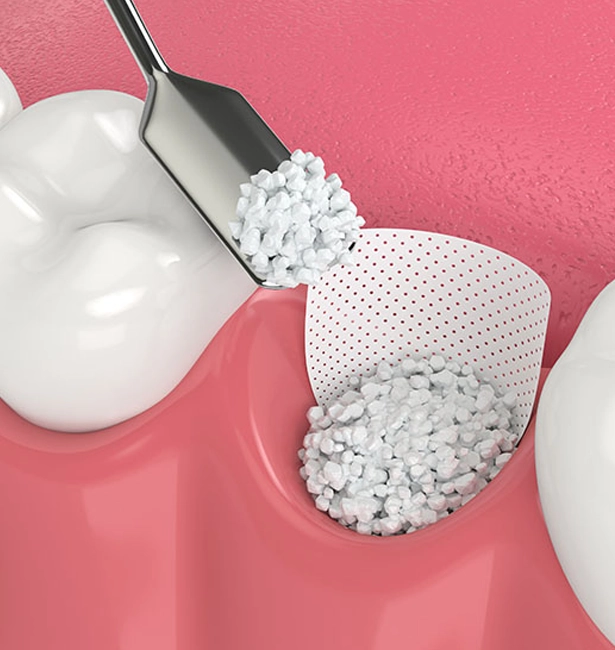
Bone grafting is a medical procedure used to address issues with implant sites that do not have enough bone structure. This can be caused by previous extractions, gum disease, or injuries. The bone for the graft can come from a tissue bank or from your own jaw, hip, or tibia. Sinus bone grafts are performed when bone needs to be replaced in the back of the upper jaw. Special membranes that dissolve under the gum may be used to ensure the success of the graft and promote bone regrowth, known as guided bone regeneration or guided tissue regeneration.
Major bone grafts are often done to correct jaw defects from traumatic injuries, tumor surgery, or congenital abnormalities. The patient's own bone is typically used for these procedures, sourced from areas like the skull, hip, or lateral knee depending on the size needed. These surgeries are usually done in an operating room and require a hospital stay.
When Is Bone Grafting Necessary?
Missing teeth can cause your jawbone to atrophy over time, limiting the prospects for dental implants. In such cases, Bone Grafting becomes a crucial solution. It prepares the site for dental implants, prevents long-term shifting of remaining teeth, and even helps in maintaining the facial structure.
What Are the Different Reasons for Bone Grafting?
The need for bone grafting can arise for various reasons, including:
- Tooth Extraction Bone Graft: To preserve the bone after tooth removal.
- Bone Graft for Dental Implant: To create a solid foundation for a dental implant.
- Gum Disease: Loss of bone due to severe periodontal issues.
- Major Jaw Defects: Resulting from traumatic injuries, tumor surgeries, or congenital conditions.